
Exclusive Buyer Agency Agreement vs Non-Exclusive in Texas
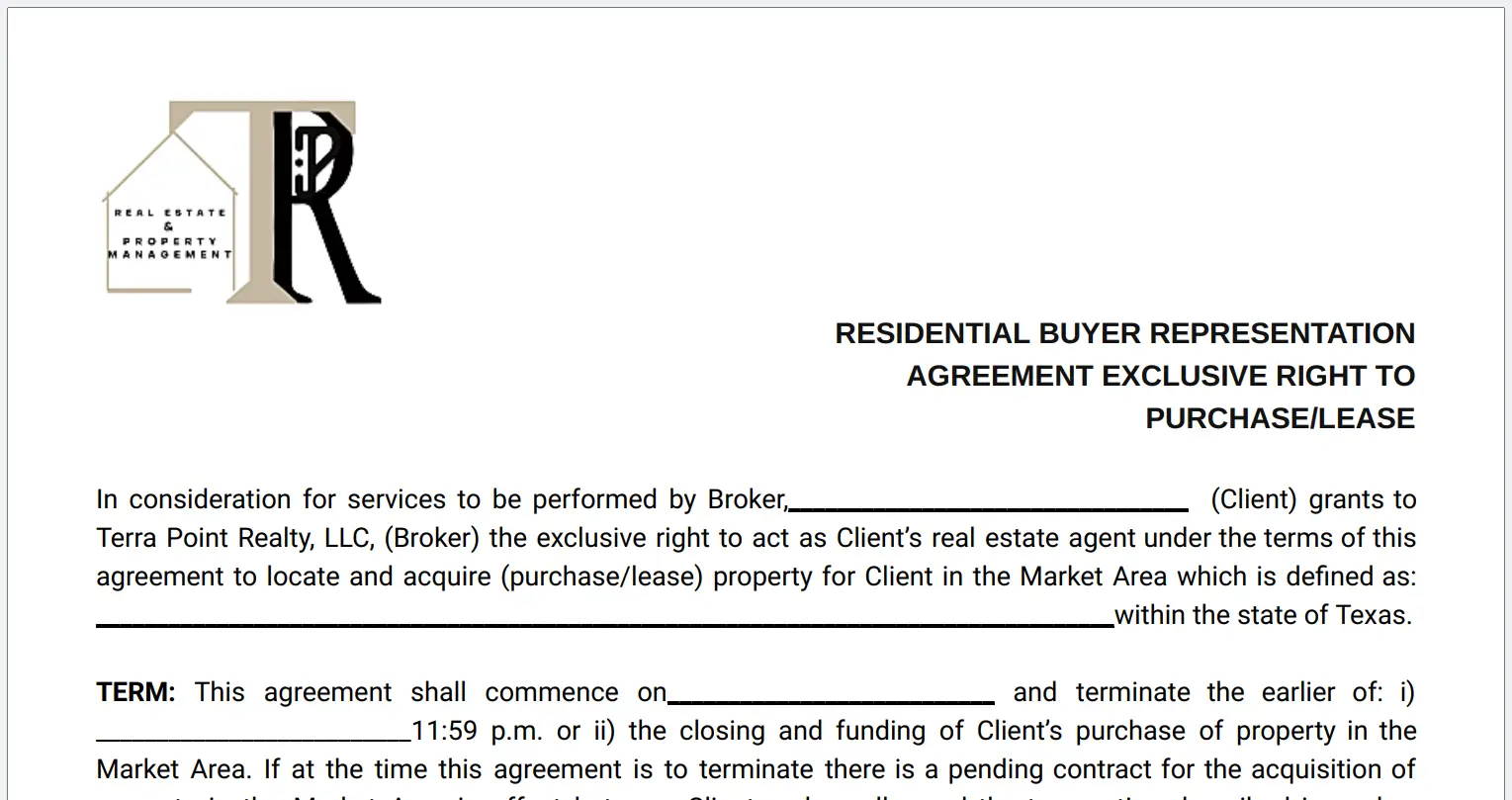

An exclusive buyer agency agreement is a contract that makes one brokerage your only representative for a set period while you shop for a home. In Texas the form is called a buyer representation agreement, and since January 1, 2026, state law requires a written agreement before an agent shows you a house. What the law does not require is that the agreement be exclusive. That choice is yours to negotiate, and it is worth understanding before you sign.
This post covers the exclusive-versus-non-exclusive decision specifically. For a walk-through of every form a Texas buyer sees in 2026, start with our guide to the Texas buyer representation agreement.
What an Exclusive Buyer Agency Agreement Means in Texas
Under an exclusive agreement, you work with one broker for the length of the agreement. If you buy a home during that term, the broker is owed the compensation written into the agreement, even if you found the house yourself on a Sunday drive through Cross Creek Ranch. Your agent, in turn, owes you the full duties of a representative: advice on price, condition and terms, and negotiation on your behalf.
A non-exclusive agreement is still a representation agreement. The agent still represents you. The difference is that you are free to work with other brokers at the same time, and compensation usually attaches only to a home that agent actually helps you buy.
The Texas Real Estate Commission’s summary of the 2026 changes lists what every written agreement must now state:
- The services the agent will provide
- A termination date
- The amount or rate of compensation, and how it is determined
- Whether the agreement is exclusive or non-exclusive
- Whether the agent represents you
- Conspicuous language that broker compensation is not set by law and is fully negotiable
So exclusivity is never hidden. It has to be stated on the agreement. If you cannot find it, ask before you sign.
Why Most Agents Ask for Exclusive
An agent working under an exclusive buyer agency agreement knows the time they put in will be paid if you buy. That usually means more of it: previewing homes, pulling tax and flood history, writing offers on short notice, and staying with you through repair negotiations. On a competitive listing, an agent who knows you are their client is more likely to drop everything on a Saturday.
There is a practical reason too. When two agents show the same buyer the same homes, disputes over who earned the compensation are common. Exclusivity removes that question before it starts.
None of that makes exclusive the right answer for everyone. It makes it the default request.
When a Non-Exclusive Agreement Makes More Sense
A non-exclusive agreement is a legitimate choice, and there are situations where we suggest it ourselves:
- You are early. If you are six months out and still learning neighborhoods, committing to one brokerage for months is more than you need.
- You are shopping two very different markets. A buyer comparing new construction in Fulshear with an acreage property in Waller County may want an agent with deep experience in each.
- You are interviewing agents. A short non-exclusive term lets you see how someone actually works before you commit.
- You only want to see one house. Texas now has a separate showing-only agreement for this. TREC’s rules require it to be non-exclusive and to run no more than 14 days, and the agent does not represent you under it.
The tradeoff is real. An agent on a non-exclusive agreement may reasonably put committed clients first. Some agents will not work non-exclusive at all. That is their call, and it is also useful information for you.
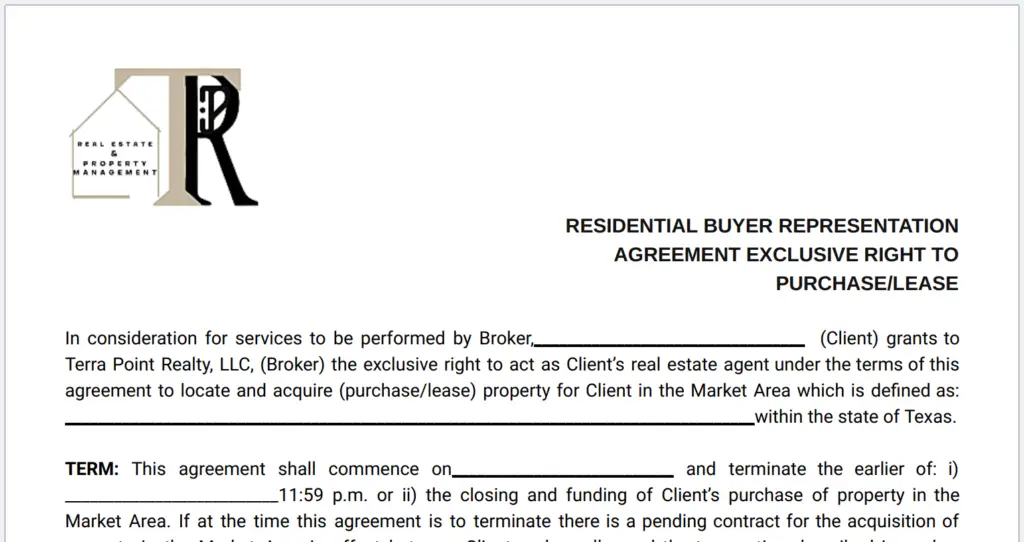
Negotiating an Exclusive Buyer Agency Agreement
If exclusive is the right fit, you still control most of the terms. Four are worth negotiating:
- Term. The agreement must have a termination date. Six months is common, but a 30- or 60-day first term is a reasonable request, with the option to extend once you know the fit is good.
- Market area. Many agreements define the area or property type they cover. If you want exclusive help in Fort Bend County but plan to buy land elsewhere on your own, get that written into the agreement.
- Compensation. The agreement has to say plainly that compensation is negotiable. Ask what you would owe if the seller contributes nothing toward your broker’s fee, and get a dollar figure at a specific price point. Our post on who pays buyer agent commission covers how seller contributions fit in.
- What happens after it ends. Read the termination section for any clause that keeps compensation owed on a home you were shown during the term, even if you buy it after the agreement expires. Ask how long that period runs.
How to Get Out of an Exclusive Buyer Agency Agreement
A buyer representation agreement is a binding contract. TREC’s guidance is direct about it: the agreement is intended to be a legal and binding contract, and you can ask the broker to release you. Whether you can end it on your own depends on what the agreement says.
In practice, most brokers will release a buyer who is unhappy, because a client who does not want to work with you is not really a client. Still, check these before you sign:
- Can either side end the agreement early with written notice?
- Is there a fee to terminate, or a retainer that will not be refunded?
- Does ending the agreement change what you owe on homes you already toured?
If you sign with a second broker while an exclusive agreement is still in force, you can end up owing compensation under both, depending on the terms. Get a written release first, then sign the new one.
Is an Exclusive Agreement Right for You?
If you know the area you want, you plan to buy within a few months, and you have met the agent and like how they work, an exclusive buyer agency agreement usually gets you better service and a cleaner process. If any of those three is missing, start non-exclusive or with a short term, and extend once you are sure.
Either way, the agent matters more than the form. Our guide on how to choose a real estate agent covers what to verify with TREC and the questions that reveal a good fit. If you are thinking about skipping your own agent entirely, read the pros and cons of using the seller’s agent first. And for the whole process start to finish, our complete guide to buying a house is a good place to begin.
If you are starting a search in Fulshear, Katy, Richmond, Brookshire or Sugar Land and want to read our agreement before you commit to anything, we will walk through it with you line by line. Call Terra Point Realty at (713) 766-1697.
About the author — Stacy Burgin, Broker, e-PRO®, TAHS, SFR®, HCSMS, PSA, TRLS, is the Broker and Founder of Terra Point Realty, a Fulshear-based brokerage serving Fort Bend and Waller Counties. She has been licensed in Texas real estate since 2013 and has closed over 300 career real estate transactions — including 130+ home sales representing nearly $30 million in sales volume — across the greater Houston area. She is a HAR Platinum Agent (4.89/5 across 124+ post-transaction client surveys). TREC License #630159. As a Texas broker, Stacy reviews every representation agreement Terra Point presents and is glad to walk a buyer through the terms before anything is signed.
Terra Point Realty, LLC — TREC Brokerage License #9002493. Information About Brokerage Services · Consumer Protection Notice · Equal Housing Opportunity.
This article is general information about Texas real estate practice, not legal advice. For advice about your specific situation, consult a Texas attorney.