
Buying a Foreclosure in Texas: What Fort Bend Buyers Should Know


Buying a foreclosure in Texas can save you money, but the savings are rarely as large as a listing photo suggests, and the risks look nothing like a normal purchase. I hold the SFR (Short Sales and Foreclosure Resource) certification, and the most useful thing I can do for a buyer interested in foreclosures is explain how the process actually works here before they fall for a house.
This guide covers how a Texas foreclosure moves from missed payment to auction, the three points where you can buy, what is different about each, and when buying a foreclosure is not the right move for you.
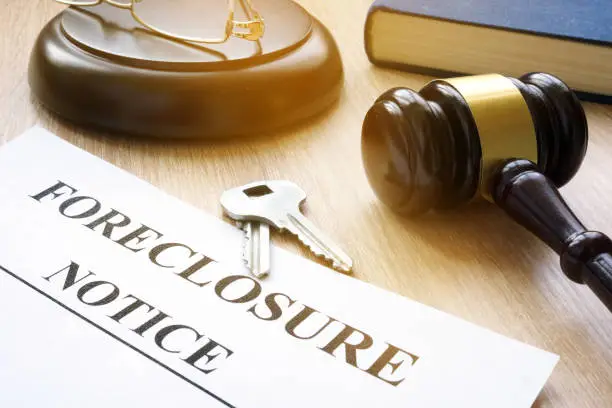
How a Texas Foreclosure Actually Works
Most Texas home loans are secured by a deed of trust with a power-of-sale clause. That lets the lender foreclose without going to court, which is why the Texas process moves faster than it does in many other states.
The basic steps are set by Texas Property Code Section 51.002. On a residence homestead, the servicer has to send a written notice of default by certified mail and give the owner at least 20 days to cure it. After that, a notice of sale has to be posted and filed with the county at least 21 days before the auction. The sale itself happens on the first Tuesday of the month, between 10 a.m. and 4 p.m., at the county courthouse or another location the commissioners court designates.
So from the first formal notice, a Texas foreclosure can reach the auction in a matter of weeks. Owners who are behind often have far less time than they think, which is part of why pre-foreclosure sales exist at all.
Three Stages for Buying a Foreclosure in Texas
Pre-foreclosure. The owner still owns the house and is behind on the loan. You buy from the owner, sometimes as a short sale where the lender agrees to accept less than what is owed. This is the slowest path, because the lender has to approve the price, and it is also where scams live. Anyone asking an owner in distress to sign over a deed before a closing is a red flag.
The trustee auction. The property is sold on the courthouse steps, or wherever the county holds sales. In Fort Bend County, the county clerk posts each month’s foreclosure notices online, and sales are held the first Tuesday of the month at the Gus George Law Enforcement Academy in Richmond. Waller and Harris counties run their own sales under the same state rules.
Bank-owned (REO). If nobody outbids the lender at auction, the lender takes the house back and later lists it, usually on the MLS through a listing agent. Most of the “foreclosures” people see on a home search site are already at this stage. Buying a foreclosure here is the closest thing to a normal purchase.
Buying a Foreclosure at the Auction: What Is Different
The auction is where the deepest discounts can happen, and it is also where buyers get hurt. A few things are true at almost every trustee sale:
- You usually cannot go inside. No showing, no inspection, no option period. You are pricing a house from the curb.
- Payment terms are set by the trustee. Expect certified funds, often the same day. This is not a place to show up with a pre-approval letter.
- You buy what the deed of trust covered. Other liens on the property may not go away. A title search before you bid is not optional.
- Someone may still live there. Removing a former owner or a tenant is the buyer’s job, and tenants can have separate federal protections.
Not every auction is a mortgage foreclosure, and the difference matters. Property tax sales carry a buyback right for the former owner. Under Texas Tax Code Section 34.21, a residence homestead or agricultural land sold for taxes can be redeemed for up to two years after the deed is recorded, with a 25% premium in the first year and 50% in the second. Other property has a 180-day window. HOA assessment foreclosures have their own redemption rules as well. If you are bidding at a tax or HOA sale, you may not truly own the house until that window closes.
Buying a Bank-Owned Foreclosure: Closer to Normal, With Exceptions
A bank-owned house is listed, shown and sold with an agent on each side, and you can use financing. Still, buying a foreclosure from a bank is not a typical resale.
Expect the bank to attach its own addendum, and read it closely, because it usually overrides parts of the standard TREC contract. Most REO sales are strictly as-is. Foreclosure transfers are also among the sales exempt from the seller’s disclosure requirement in Texas, so there is no one to tell you what they knew about the house, because the bank never lived in it.
Inspections still matter more here than anywhere else. Ask the listing agent early whether the utilities will be turned on, because an inspector cannot test plumbing, HVAC or electrical in a house with everything off. If you are financing, the appraisal can flag condition problems that have to be fixed before closing. Our comparison of an FHA vs conventional loan explains why that matters more on some loan types than others.
The Real Risks of Buying a Foreclosure
- Title and liens. Unpaid taxes, HOA dues, contractor liens and junior loans can all attach to a property. Read our explainer on what a property lien is before you bid on anything.
- Condition. Vacant houses in Houston humidity deteriorate fast. A few months with no air conditioning can mean mold, warped floors and stripped fixtures. Roof leaks nobody reported are common.
- MUD and HOA balances. Many Fort Bend neighborhoods sit inside municipal utility districts and HOAs. Confirm what is owed and who pays it at closing.
- Time. Short sales can take months to approve. Bank-owned counteroffers can take days per round. If you need a firm move-in date, buying a foreclosure is not the easiest path.
- Competition. Cash investors buy a large share of foreclosures, and they are pricing the risk for a living.
Where the Savings Actually Come From
The discount you get for buying a foreclosure is not free money. It is mostly the market pricing in repairs, uncertainty and the lack of an inspection or disclosure. The savings are real only if your repair estimate is honest and the house still pencils out against normal sales nearby.
My rule when buying a foreclosure with a client: price the repairs first, add a cushion for what you cannot see, then compare the total to the recent sales in that subdivision. If you are looking at it as a rental or a flip, our guide on how to spot an investment property walks through the numbers I look at.
Is Buying a Foreclosure Right for You?
It can be a good fit if you have cash reserves beyond the down payment, flexibility on timing, and the stomach for a house that needs work. It also helps if you, or someone you trust, can estimate repairs.
It is usually not a good fit if you are stretching to make the down payment, need to move by a fixed date, or cannot absorb a surprise repair bill in the first year. For most first-time buyers, a well-inspected resale with a seller’s disclosure is the safer first home, even at a higher price.
If you want to look at foreclosures in Fulshear, Katy, Richmond, Rosenberg or Waller County, I am happy to walk through a specific property with you, including the ones I would tell you to pass on. Call Terra Point Realty at (713) 766-1697 or reach out through our contact page.
This is general information, not legal advice. Foreclosure, tax sale and HOA sale rules are technical, and a real estate attorney or title company should review any auction purchase before you bid.
About the author
Stacy Burgin is the Broker and Founder of Terra Point Realty and a Texas Affordable Housing Specialist (TAHS), trained through Texas REALTORS® in the down-payment assistance and first-time buyer programs available across Fort Bend and Waller Counties — including USDA, FHA, VA, TDHCA (Texas Department of Housing and Community Affairs), and county-level assistance programs. She has been licensed in Texas real estate since 2013 and has closed over 300 career real estate transactions — including 130+ home sales representing nearly $30 million in sales volume — across the greater Houston area, from $20,000 entry-level properties to $1.2M luxury homes. HAR Platinum Agent (4.89/5 across 124+ post-transaction client surveys). TREC License #630159. Terra Point Realty, LLC — TREC Broker License #9002493. Member, Houston Association of Realtors.
Terra Point Realty, LLC — TREC Brokerage License #9002493. Information About Brokerage Services · Consumer Protection Notice · Equal Housing Opportunity.