
Property Fraud Alert: A Free Tool for Fort Bend Homeowners
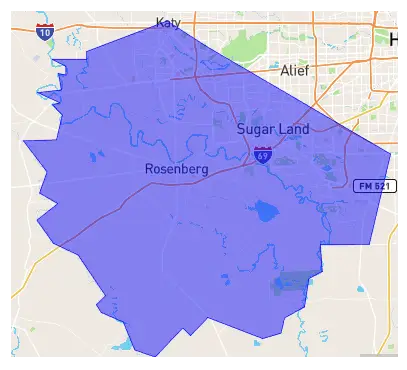

A property fraud alert is free, takes about five minutes to set up, and does most of what those $15-a-month “home title lock” ads promise. If you own a home in Fulshear, Richmond, or Sugar Land, that is probably the most useful thing you will read this week.
The underlying problem is real. The way it gets sold to you mostly is not. So here is the calm version: what deed fraud actually is, which properties get targeted, what Texas lawmakers changed in 2025, and how the free Fort Bend property fraud alert compares to the paid products.
What deed fraud actually is, and what it is not
Deed fraud happens when someone forges a deed transferring your property into their name, then records that document with the county clerk. Once it sits in the real property records, it looks official to anyone doing a casual search. From there the goal is usually to borrow against the property, sell it to an unsuspecting buyer, or collect rent on it.
Two things deserve to be clear, because the advertising blurs them.
First, a forged deed does not actually transfer ownership. Under Texas law, a document signed by someone who was not the owner is void. You do not wake up and find the house belongs to a stranger. What you lose is time, legal fees, and the ability to cleanly sell or refinance until the record is cleared. That is a genuine cost, and it is the honest reason to care.
Second, nobody can stop a document from being filed. County clerks in Texas have a statutory duty to record documents that meet basic formal requirements. The clerk is not authorized to investigate whether a signature is real. So any product claiming it will “lock” your title is describing something that does not exist. What you can do instead is find out fast, which is exactly what a property fraud alert does.
For scale: the FBI’s Internet Crime Complaint Center logged more than $275 million in real estate fraud losses nationally in 2025. Most of that is wire fraud at closing rather than forged deeds. You can read the full IC3 annual report if you want the underlying numbers.
Which properties actually get targeted
This is not random. It follows a pattern, and the pattern is about how easy a property is to file against without anyone noticing.
- Property nobody occupies. Vacant lots, land held for future building, and homes sitting empty between uses. If no one checks the mail at that address, a bad filing can sit for a year.
- Inherited property where probate was never finished. A house passes to heirs, the record still shows a deceased owner, and the property sits in limbo. This is common in older parts of Richmond and Rosenberg.
- Rentals owned from out of state. The owner is not local and relies on a property manager who has no reason to watch deed records.
- Property owned free and clear. No mortgage means no servicer running periodic title checks.
If you live in your home, carry a mortgage, and get your own mail, you sit at the lower-risk end. But if you own a rental in Katy or a lot in Waller County that you drive past twice a year, you are the profile worth a property fraud alert.
What Texas changed in 2025
The Texas Legislature took this up in 2025 and strengthened the state’s response to fraudulent property filings, adding criminal penalties and restitution for victims. Senate Bill 16 from the 89th Legislature is the main vehicle. You can read the official bill analysis on the Legislature’s site.
Texas owners already had tools, though. Government Code Chapter 51, Sections 51.901 and 51.903 in particular, gives you a comparatively fast court process for voiding a fraudulent document without a full lawsuit. It is a real remedy, and your attorney will likely reach for it first.
None of that prevents a filing. It shortens the cleanup. That is still the whole game.
How the Fort Bend property fraud alert works
The Fort Bend County Clerk’s office runs a free monitoring service, and almost nobody we talk to knows about it.
You register your name. When a document matching that name gets recorded in the county’s real property records, the system notifies you by email or phone. It will not stop the filing. Instead it tells you within about a day that one happened, which is the difference between clearing a bad document in a few weeks and finding it two years later when you try to sell.
You can sign up on the Fort Bend County Property Fraud Alert page. It really does take a few minutes.
Setting up a property fraud alert in more than one county
A few practical notes, because most people set this up wrong the first time.
Register every version of your name. “Robert J. Smith,” “Robert Smith,” “Bob Smith,” and any former or maiden name that appears on an older deed. The system matches the name string, so a variation you skip is a gap.
Register your LLC or trust separately. Many landlords in this area hold property in an entity, and the entity name is what appears on the deed.
Register in every county where you own. These are county-level systems. If you live in Fulshear but own a rental in Cypress, Harris County is a separate signup through the Harris County Clerk’s real property division. Waller County is separate again.
Because the Katy area straddles Fort Bend, Harris, and Waller, plenty of our clients need to do this three times. Annoying, but it is still a one-afternoon job.
Why a property fraud alert beats a paid title lock
Here is where we would push back on the marketing.
The Federal Trade Commission published a consumer alert titled “Home title lock insurance? Not a lock at all.” The FTC’s point is short: these are monitoring services, not insurance and not a lock. They watch public records and tell you when something is filed, which is what a county property fraud alert already does for free.
A paid service can add two honest things. It may monitor several counties or states in one subscription, which helps if you own property in scattered places. Some also bundle legal expense reimbursement, which the county alert does not include. If that is what you are buying, read the cap and the exclusions first.
What it cannot do is prevent a filing. Nothing can.
People then ask whether their owner’s title policy covers this. Generally, an owner’s policy covers defects that existed when you purchased, not events years afterward, and forgery coverage is usually tied to that historical window. Some carriers now offer endorsements for post-purchase fraud. For a definite answer on your specific policy, call the title company that issued it. That is a free phone call and a better answer than any blog post, ours included. We are real estate agents, not attorneys or title examiners.
If something has already been filed
Move promptly, but do not panic. This order generally makes sense.
- Pull the record. Search the Fort Bend County Clerk’s real property records for your name and your property. Sometimes what triggered the alert is a legitimate lien release or a corrected instrument.
- Get a certified copy of anything that looks wrong.
- Call a Texas real estate attorney. People delay this step. The Chapter 51 process is faster than general litigation, but it is still a court filing.
- Notify your title company and your mortgage servicer.
- File reports with local law enforcement and the Texas Attorney General’s consumer protection division.
- Do not sign anything the filer sends you, including anything framed as a settlement or a quitclaim to “fix” it.
The short version
If you do nothing else after reading this, set up the free Fort Bend property fraud alert with every name variation and entity you use. Then do the same in Harris and Waller Counties if you own there.
And if you own vacant land or inherited property that never cleared probate, deal with the probate. That is the single biggest exposure on this list, and it will complicate a sale later even if no fraud ever occurs.
None of this is urgent in the way the ads suggest. It is simply worth an afternoon.
If you own property in Fort Bend, Waller, or Harris County and want to talk through where your situation sits, we are happy to have that conversation. Call us at (713) 766-1697, or read through our other homeowner and buyer education posts. If a sale is on the horizon, our post on what Fort Bend buyers sign in 2026 covers the representation side. If you are weighing a build instead, we recently walked through buying new construction in Katy’s Sunterra. And when a property’s condition is part of the question, Brent handles the roof and structure side of those conversations.
About the author
About the author — Stacy Burgin, Broker, e-PRO®, TAHS, SFR®, HCSMS, PSA, TRLS, is the Broker and Founder of Terra Point Realty, a Fulshear-based brokerage serving Fort Bend and Waller Counties. A Houston native and Fulshear resident for over a decade, Stacy has been licensed in Texas real estate since 2013 and has closed over 300 career real estate transactions — including 130+ home sales representing nearly $30 million in sales volume — across the greater Houston area, from $20,000 entry-level properties to $1.2M luxury homes. She is a HAR Platinum Agent (4.89/5 across 124+ post-transaction client surveys). TREC License #630159. Terra Point Realty, LLC — TREC Broker License #9002493. Member, Houston Association of Realtors. Her SFR® background means she spends more time than most agents in county records and distressed-title situations, which is where questions like this one usually surface.
This post is general information, not legal advice. For questions about a specific document, deed, or title policy, consult a Texas real estate attorney or the title company that issued your policy.
Terra Point Realty, LLC — TREC Brokerage License #9002493. Information About Brokerage Services · Consumer Protection Notice · Equal Housing Opportunity.